WAS AFRICA SUFFICIENTLY READY FOR THE EL NINO ?- In spite of Early Warning
Posted by Tendai Mugani on March 31, 2016 7:00 AM SAST





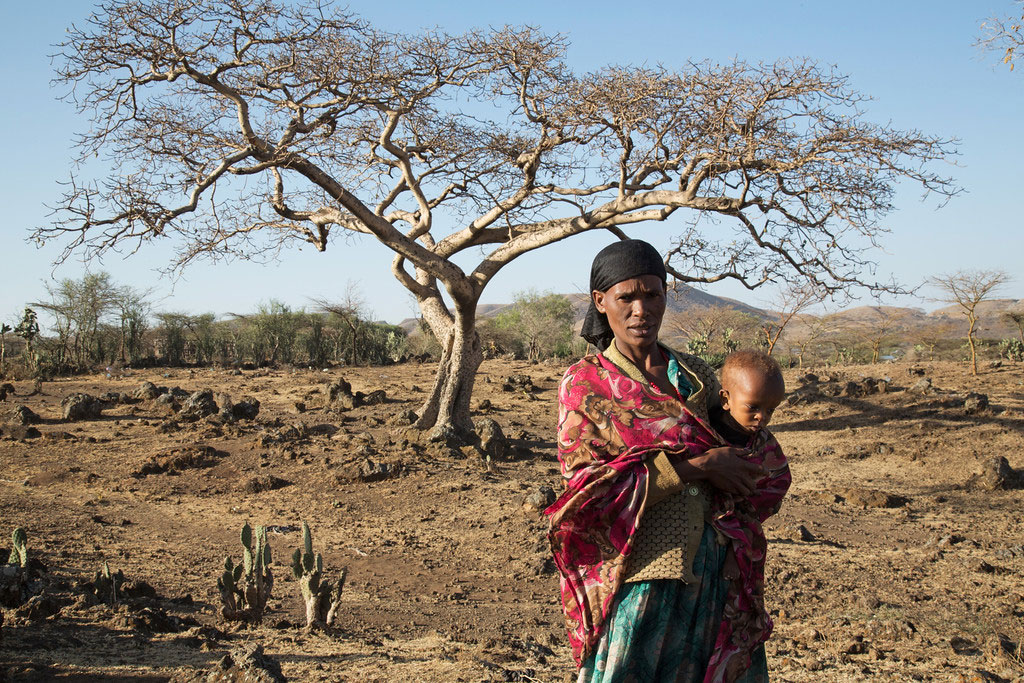
Sorce and her son Abdallah, one year and 8 months, in the Oromia region of Ethiopia. Abdallah doesn't walk yet and is severely malnourished. Photo: OCHA/Charlotte Cans
24 March 2016 – To aid drought-affected people of Ethiopia, the United Nations and humanitarian partners have launched a 90-day campaign to raise awareness about the food crisis in the country and raise funds to bridge a $700 million gap.
Abstract.
Over the past two decades, decision-making in disaster risk management (DRM) has evolved significantly. This has resulted in a re-focus from a predominantly top-down, ‘command and control’ style of management, to the encouragement of ‘people-centred’ approaches and local participation. In this paper we critically explore this transition, particularly examining the teething problems related to the adoption of people-centred approaches, and especially to the transfer of DRM responsibility from the agencies in charge to the private citizens. We review traditional top-down approaches against a backdrop of changing circumstances relevant to disaster risk, and present some background to the international push for people-centred approaches, comparing the key characteristics of the two approaches. Using three case studies, we discuss how the personal responsibilities of citizens are weighed against the responsibilities of local authorities. The examples reveal a complex landscape characterised by insufficient resources at the local level, and lack of willingness among public at risk to share responsibility for disaster risk management with authorities. Moreover, local participation can create situations of conflict between public and private interests. If official authorities are to implement the new people-centred approach, they must better understand residents' perspectives and responsibility expectations, become more competent communicators, and be willing to engage in long-term dialogue with communities. This requires the courage to question existing institutional arrangements, and not only devolve power in DRM, but also relinquish responsibility to citizens. Future research must focus particularly on better understanding the benefits and challenges of shared state and civil responsibility in DRM theory and practice.
Situation Overview
The ZIMVAC 2015 rural livelihoods assessment indicated that approximately 10% of the rural population is projected to be food insecure for the period of October - December 2015 and that 16% of the rural popultationis projected to be food insecure for the period of January - March 2016.
Demand for cereals is high in the southern provinces, following very poor harvests. The 2014-15 total cereal production for all provinces was lower than the previous season and the five-year average. Most markets in these southern provinces have limited supplies of grain due to poor inflows from distant source areas (Mashonalands, parts of Midlands and Manicaland) which experienced lower than usual production.
Zimbabwe currently has a national cereal deficit of around 650 000 MT. for the 2015-16 consumption year. The Grain Marketing Board’s (GMB) Strategic Grain Reserve levels are reportedly 76 percent below their minimum required. Grain deliveries to the GMB are very low this year, with only 29 percent (11,500 MT) received as of early July, compared to 40,000 MT by the same time last year. WFP is currently implementing a Food for Assets (FFA) program (between May and November) in 9 priority districts, targeting a total of nearly 18,000 beneficiaries.